
Start here
How to start a pavement maintenance business
7-minute read · Figures checked October 2026
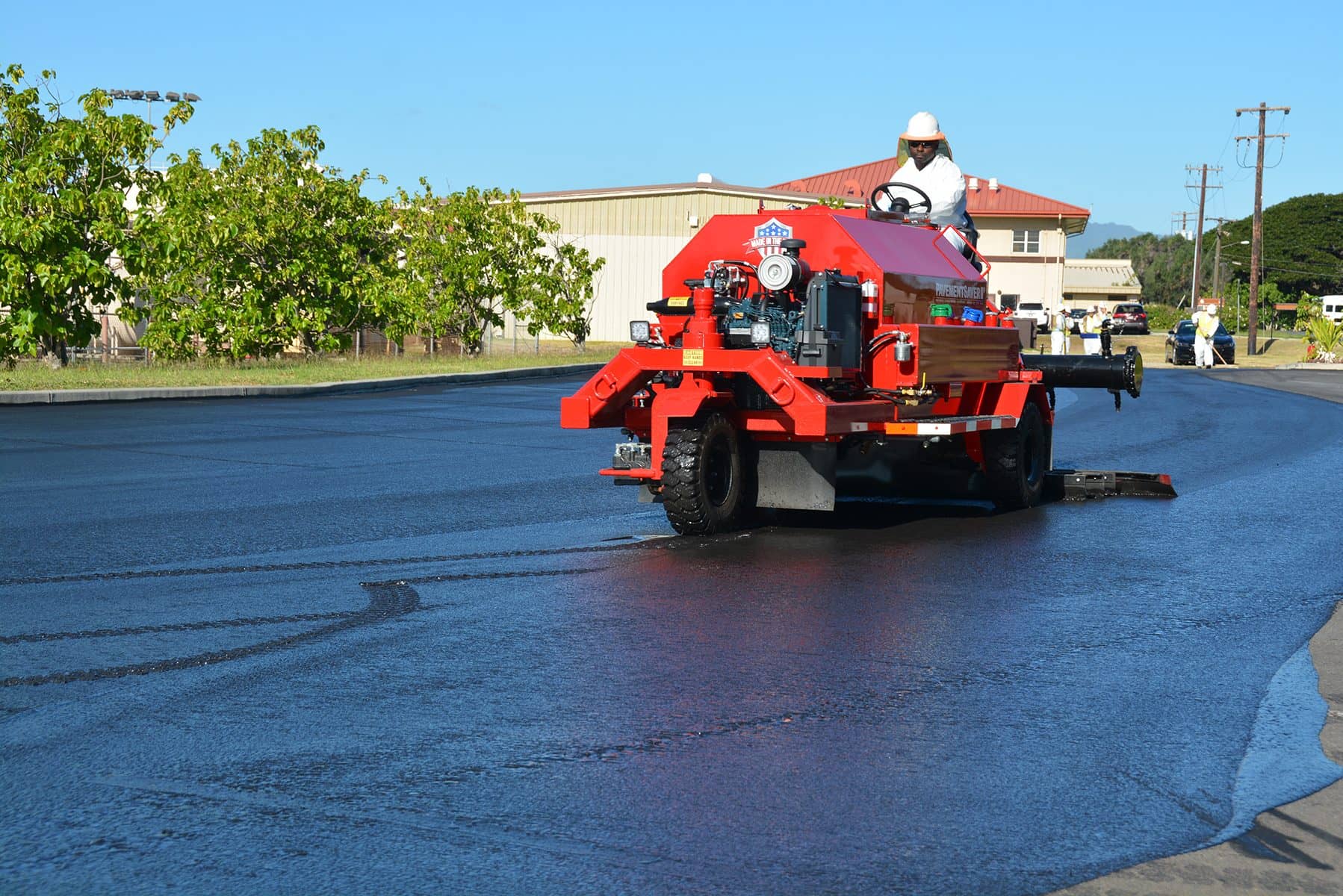
Photo: NAVFAC / Wikimedia Commons, CC BY 2.0
.jpg)
The short answer
Pick one service you can do well and safely, and prove that people near you will pay for it. Then set up the business in order: the honest math, a cash budget, registration and licenses, insurance and a first-season plan. Start small, on the side if you can, with cash you've saved. This page compares three starting lines (sealcoating, crack filling and line striping) and links to a guide for each. The money and setup steps live in Business 100: Start Right.
What the work is
Pavement maintenance keeps parking lots, driveways and private drives in service. The trade includes sealcoating, crack filling and sealing, striping, patching and small paving, sweeping and pressure washing, and snow and ice work.
It protects pavement that's still sound. The Federal Highway Administration (FHWA) says preservation work generally doesn't add structural value. FHWA's crack manual calls crack sealing or filling uneconomical and technically unsound when a lot has a large number of cracks or badly broken-down ones. Its guidelines send badly broken cracks to repair, like patching, and widespread broken cracking to rehabilitation. Recommend the repair, or refer it out, and put it in writing.
Your customers are homeowners, property managers, homeowners associations (HOAs), churches, schools and small businesses (B100.3). Start with small jobs: a driveway, a church lot, a small strip center. Property managers and HOA boards often set next year's budget months ahead, so ask when they plan.
Choose your first service
| Sealcoating | Crack filling and sealing | Line striping | |
|---|---|---|---|
| What it is | A liquid coat over asphalt lots and driveways | Material placed in cracks to keep water out | Painted stalls, arrows and accessible spaces |
| Who buys | Homeowners, property managers, HOAs, churches, small businesses | The same customers, often with sealcoating | Property managers, businesses, churches, schools |
| Learn first | Prep, crack work, mixing, application, cure | Telling cracks apart, cleaning, safe hot-pour work | Layout, accessible parking rules, straight lines |
| Starting equipment | Squeegees and brushes, or a spray rig | A cold-pour applicator or a melter, plus an air compressor | A walk-behind striper, stencils, layout tools |
| Guide | Sealcoating | Crack filling | Line striping |
Swipe the table sideways to see every column.
Pick the line where four things overlap: demand near you, the length of your season, your skills and the cash the equipment takes (B100.3, B100.4). Start with one. These three fit together. Crack work comes before sealcoating, and striping comes after it, because fresh sealer covers the old lines. Snow and ice work can fill the winter later (B100.8).
Sealing a commercial lot also brings up accessible parking. The U.S. Access Board's guide treats resealing a lot as an alteration. The U.S. Department of Justice says a business that restripes must provide accessible spaces as the 2010 Americans with Disabilities Act (ADA) Standards require. If you seal it, make sure someone gets those spaces right when the lines go back.
Example. Dana (example) has run a sealcoating crew for six years and has a truck that can pull a small trailer, but not much cash. She starts with crack filling on Saturdays, using cold-pour material and a rented compressor. Her first three paid jobs are church lots near her house. She adds sealcoating by hand the next spring, once her savings cover the budget.
The launch sequence
- Run the honest math. Compare what you'd keep as an owner with your paycheck now (B100.1).
- Choose your way in. Start from scratch, buy, or join someone already in business (B100.2).
- Prove the demand. Talk with 10 likely customers and finish three paid jobs before you buy a rig (B100.3).
- Learn the trade. Work beside an experienced operator, and ask your supplier what hands-on training it offers. Read the technical data sheet and the safety data sheet (SDS) for every product you'll use.
- Budget, and pay with cash. Get three quotes for every big item and add working capital (B100.4). Never fund the start with a merchant cash advance or your retirement account (B100.5).
- Set up the business. Choose a structure, register, get your employer identification number (EIN) and check licenses and permits (B100.6). The IRS issues an EIN for free, so never pay a website for one.
- Get insured before the first paid job (B100.7).
- Set up safety, using the basics below.
- Write your first-season plan: a pricing floor, rainy-week capacity, a 13-week cash forecast and a winter plan (B100.8).
- Decide: go, go small on the side, or wait with a date and a fix list (B100.9).
Licenses, insurance and safety apply to every line
Licenses. The U.S. Small Business Administration (SBA) says license and permit requirements vary with your business activities, your location and government rules, and it lists construction among the activities often regulated locally. Check your state, county and city. States sort this work differently. California, for example, puts protective coatings and directional lines on parking facilities under its C-32 Parking and Highway Improvement classification.
Insurance. The SBA notes that you may be legally required to buy certain types of business insurance. Talk with an agent before your first paid job (B100.7).
Safety. The Occupational Safety and Health Administration (OSHA) requires employers to keep labels and SDSs for the chemicals workers handle, and to train workers to handle them. When other controls fall short, employers must provide personal protective equipment (PPE) and train each worker to use it. For heat, OSHA encourages water, rest and shade. OSHA's On-Site Consultation Program is no-cost, confidential, separate from enforcement and aimed mainly at smaller businesses.
Public roads. Road work is a different job. OSHA requires the traffic control devices that protect construction workers to conform to Part 6 of the Manual on Uniform Traffic Control Devices (MUTCD).
Starting on the side
Saturday jobs while you keep your paycheck are the safest way to test the trade (B100.1). Keep the work away from your employer's customers and equipment, and have an attorney read any non-compete you signed. The IRS says side income must be reported even when it's paid in cash and no tax form arrives. Set tax aside from every job.
Your Move
Do this week
- Pick one service line. Write one line each on demand near you, your season, your skills and your cash.
- Read that trade's guide, then run the honest math (B100.1).
- List 25 likely customers for that line (B100.3).
- Call your state's contractor licensing board and your city clerk. Write down who you talked to and what they said.
- Ask one experienced operator or supplier about hands-on training.
Log it: I picked my first service line.
Frequently asked questions
How do I start a pavement maintenance business?
Pick one service and prove demand with three paid jobs. Then budget, register, license and insure the business, in that order. The ten steps above link to a lesson for each.
Which pavement service should I start with?
The one people near you already pay for that fits your season, your skills and your cash. Sealcoating, crack filling and line striping each have a guide.
How much does it cost to start a pavement maintenance business?
There's no single number. It depends on the service and how big you start, and equipment is only part of it. Build a full budget from three quotes per item (B100.4).
Do I need a license for pavement maintenance work?
It depends on your state, county and city. Call your state's contractor licensing board and your local clerk before your first job.
Can I start a pavement business on the side?
Yes. Keep it away from your employer's customers and equipment, and report every dollar, cash included (B100.1).
Watch out for
- Buying a rig before you've finished three paid jobs.
- Sealing or filling pavement that has already failed.
- Restriping a lot without checking the accessible spaces.
- Equipment or training pitches built on somebody's best week. Run your own numbers (B100.1).
- A public road job priced like a parking lot.
Free help
- SBA: Launch your business, including licenses, permits and your EIN
- Small Business Development Centers: no-cost business consulting
- SCORE: free, confidential mentoring
- OSHA On-Site Consultation: no-cost, confidential safety help for smaller businesses
- IRS: Get an employer identification number
Step-by-step guides
- How to Add Liquid Road to Your Pavement Maintenance Business →
- Set Up Your Pavement Business: Entity, Registration and EIN →
- Open a Business Bank Account and Keep Useful Job Books →
- Insurance Terms for a Pavement Business: What to Ask a Licensed Professional →
- Pavement Business Licensing and Permits by State →
- Pavement Maintenance Equipment and Startup Budgets: Side Hustle, Solo and Crew →
- Tools You Need to Start a Pavement Maintenance Business →
- How to Find a Materials Supplier Near You →
- Pavement Materials Calculators: Sealer, Crack Filler and Striping Paint →
- How to Price Pavement Work and Build a Complete Bid →
- Estimate Pavement Area from Satellite Images, Then Verify the Job →
- Find Your First Pavement Customers and Build a Useful Website →
- Set Up Google Business Profile and Ask for Honest Reviews →
- Hire, Train and Keep a Pavement Maintenance Crew →
- Pavement Maintenance Safety and OSHA Basics for New Employers →
- Plan Your Pavement Work Season and Make Better Weather Calls →
- Grow a Pavement Maintenance Business to Multiple Crews →
- How to Choose a Crack Cart and Melter, Stock Parts and Plan Maintenance →
- How to Get Winter Business: Snow Removal and Brine Anti-Icing →
- When to Buy a Paver: Work Volume, Rent vs Buy and Used vs New →
- Equipment Financing for a Pavement Business: Options and What Lenders Ask For →
- When You Need Collections: Overdue Invoices, Next Steps and Lien Basics →
Start guides
Build it with NPMCA
NPMCA is the national association for the people who maintain America's pavement. Compare the membership options, then join online. The Start guides, tools and downloads stay free, with or without membership.
This is general education, not tax, legal, investment or insurance advice. Rules change and every situation is different. Check the sources below, and talk to a qualified professional before you act on it.
Sources
- FHWA: Guidance on highway preservation and maintenance
- FHWA: Materials and procedures for sealing and filling cracks in asphalt-surfaced pavements: manual of practice (FHWA-RD-99-147)
- U.S. Access Board: Guide to the ADA Standards, chapter 5: parking spaces
- U.S. Department of Justice, ADA.gov: ADA compliance brief: restriping parking spaces
- SBA: Launch your business
- California Contractors State License Board: C-32 Parking and Highway Improvement Contractor
- IRS: Get an employer identification number; Filing tips and updates for gig economy workers
- OSHA: Hazard communication; Personal protective equipment; Heat; On-Site Consultation
- OSHA: 29 CFR 1926.200, accident prevention signs and tags