
Lesson B100.8 · Business 100: Start Right
Your first season plan
5-minute read · Figures for tax year 2026
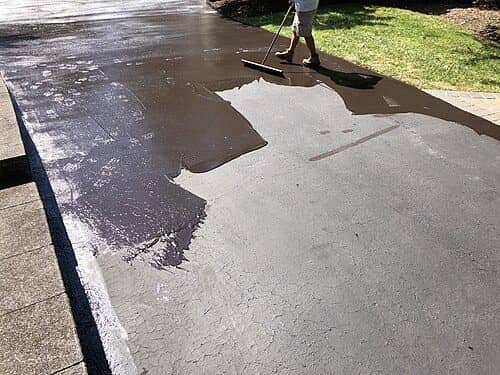
Photo: Famartin / Wikimedia Commons, CC BY-SA 4.0

The short answer
Your first-season plan fits on one page: your first customers, the lowest price you can take on a job, how many jobs fit in a rainy week, a 13-week cash forecast, a set owner pay, a tax account fed from every deposit, books kept from day one, and a plan for winter. Price from your own costs, never from a competitor's price.
Your pricing floor
Your pricing floor is the least you can charge for a job without losing money on it. It's your direct costs for the job plus a share of your overhead. Profit goes on top of the floor. Business Finance 101 goes deeper.
- Direct costs: materials (from the product's coverage and your supplier's cost), labor including your own time and any payroll costs, fuel and travel, equipment wear and upkeep, rentals and disposal.
- Overhead: the bills you pay whether or not you work that day: insurance, phone, software, marketing, accounting, truck costs not tied to one job.
- Overhead per productive day: a year of overhead divided by the days you'll actually bill.
Example (made-up numbers, not a price guide). Tomas expects $12,000 of overhead and 100 productive days, so each working day carries $120 of overhead. One day-long job has $520 of materials, $480 of labor including payroll costs, $60 of fuel and travel, and $40 of equipment wear: $1,100 of direct costs. His floor is $1,100 plus $120, or $1,220. Any price below $1,220 loses money on the job. A competitor's lower price doesn't change his costs.
How much work fits in a week
Time your own jobs from the first day: drive, setup, prep, crack work, application, cleanup. Then plan the season on a rainy week, not a dry one.
Example. Say Tomas can finish three average driveways on a full working day (made-up; time your own). A dry five-day week holds 15 jobs. A week with two rain days holds 9. Weather limits come from the product's data sheet, and a rained-out job pushes the next ones back. Put your weather and rescheduling terms in writing on every estimate.
A 13-week cash forecast
Profit on paper doesn't pay the supplier. For each of the next 13 weeks, write the cash you start with, the money you expect in (on the date you expect to collect it, not the date you finish), the money going out (on the date it's due) and the cash left at the end. Set a minimum cash level and watch for any week that drops below it.
| Week (made-up) | Cash at start | Money in | Money out | Cash at end |
|---|---|---|---|---|
| 5 | $6,000 | $3,200 | $2,100 | $7,100 |
| 6 (rain most of the week) | $7,100 | $900 | $2,400 | $5,600 |
| 7 (materials restock, insurance due) | $5,600 | $1,200 | $3,900 | $2,900 |
| 8 | $2,900 | $4,100 | $2,000 | $5,000 |
Swipe the table sideways to see every column.
Tomas's minimum is $3,000, and week 7 dips under it. Because he saw it in week 4, he splits the materials order and calls a property manager whose invoice is due that week. If a week still comes up short, cut the owner draw or talk to the supplier early. Never cover it with a merchant cash advance. Business Finance 102 covers the full forecast.
Owner pay, taxes, books and winter
- Owner pay. Move a set amount from the business account to your personal account on a set day, like every other Friday. Check it each quarter.
- Tax account. From the very first deposit, move a set percentage into a separate tax account. Set the percentage with a CPA or enrolled agent. If you expect to owe $1,000 or more for the year after withholding and credits, you'll generally need to make estimated payments. For 2026 income they're due April 15, June 15 and September 15, 2026, and January 15, 2027.
- Books from day one. Keep every receipt and invoice, and a file for each job: estimate, photos, invoice and payment.
- Winter. Pick snow and ice work, savings, or both. Example: if the business's winter bills run $1,200 a month for four months, that's $4,800 to set aside, about $200 a week over a 24-week season (made-up numbers). Your household's Winter Fund is separate.
Your Move
Do this week
- Write your pricing floor: direct costs for a typical job plus overhead per productive day.
- Write your weekly capacity for a dry week and a rainy week.
- Start a 13-week cash forecast and pick a minimum cash level.
- Set your owner pay day and, with a tax pro, your tax percentage.
- Write your winter plan: snow and ice work, savings, or both.
Log it: I wrote my first-season plan.
Common questions
How should I price my first sealcoating jobs?
Start from your own costs. Direct costs plus your share of overhead make the floor, and profit goes on top. Never start from a competitor's price.
How much should I set aside for taxes?
Set the percentage with a CPA or enrolled agent, then move it into a tax account from every deposit. Lesson P101.2 works one example.
What do pavement contractors do in winter?
Some run snow and ice work. Others save in season to cover winter bills and owner pay. Either way, plan it before November.
Watch out for
- Pricing to beat the lowest bid in town.
- Booking every weekday as if it won't rain.
- Spending the tax money because it's sitting in the account.
- One good month that turns into a new truck payment.
Free help
- IRS: 2026 Form 1040-ES, estimated tax
- SBA: Calculate your startup costs, including a break-even calculator
- Small Business Development Centers and SCORE: free help reviewing your plan
Free practice
Lesson check
5 questions on this lesson, one at a time, with the answer and the reason after each. Pass with 4 right, including every must-know question.
This is general education, not tax, legal, investment or insurance advice. Rules change and every situation is different. Check the sources below, and talk to a qualified professional before you act on it.