
NPMCA field guide · Public tools and downloads
Pavement Maintenance Safety and OSHA Basics for New Employers
Identify hazards for the actual task and site, find the applicable federal or state-plan requirements, and brief the crew before work begins. This page helps organize a hazard review; it does not certify compliance or replace trained task-specific planning.
Author: NPMCA · Updated · Version 1
Sources are checked; this is general education, not professional advice.

Photo: Marianna Zuzanna / Pexels, Pexels License
Before you start
- The actual site, service scope, crew tasks and equipment.
- Current SDS, product instructions and equipment manuals.
- A responsible supervisor and the applicable safety authority/contact.
What you will finish with
- A documented job hazard assessment and site briefing.
- A product/SDS and training register.
- An inspection, correction and stop-work record.
Source note: sources below were checked as of October 11, 2026. Product revisions, local rules and your written quotes control the actual job. Unknown costs stay blank.
Identify the actual job hazards.
Walk the scope before deciding how it will be carried out. Document who could be harmed, how, and what must change before work.
Traffic, backing, pedestrians and closure
Mark customer/crew vehicle routes, pedestrian access, reversing areas and emergency access. Decide how the site will be separated from live traffic and who controls changes.
Hot materials, fuel and moving equipment
List hot sealant, burners, pressurized systems, moving parts, loading and transport tasks. Use the exact machine's manual and trained supervision; do not invent a safe repair or fueling procedure.
Chemicals, skin contact and ventilation
Match each product to its current safety data sheet and label. Identify handling, exposure, cleanup and spill controls for the actual material and site.
Cutting/grinding, silica and fumes where applicable
Identify dust/fume-generating tasks separately from coating work. Check applicable exposure/control requirements before adding cutting, grinding or a heated-material task to the scope.
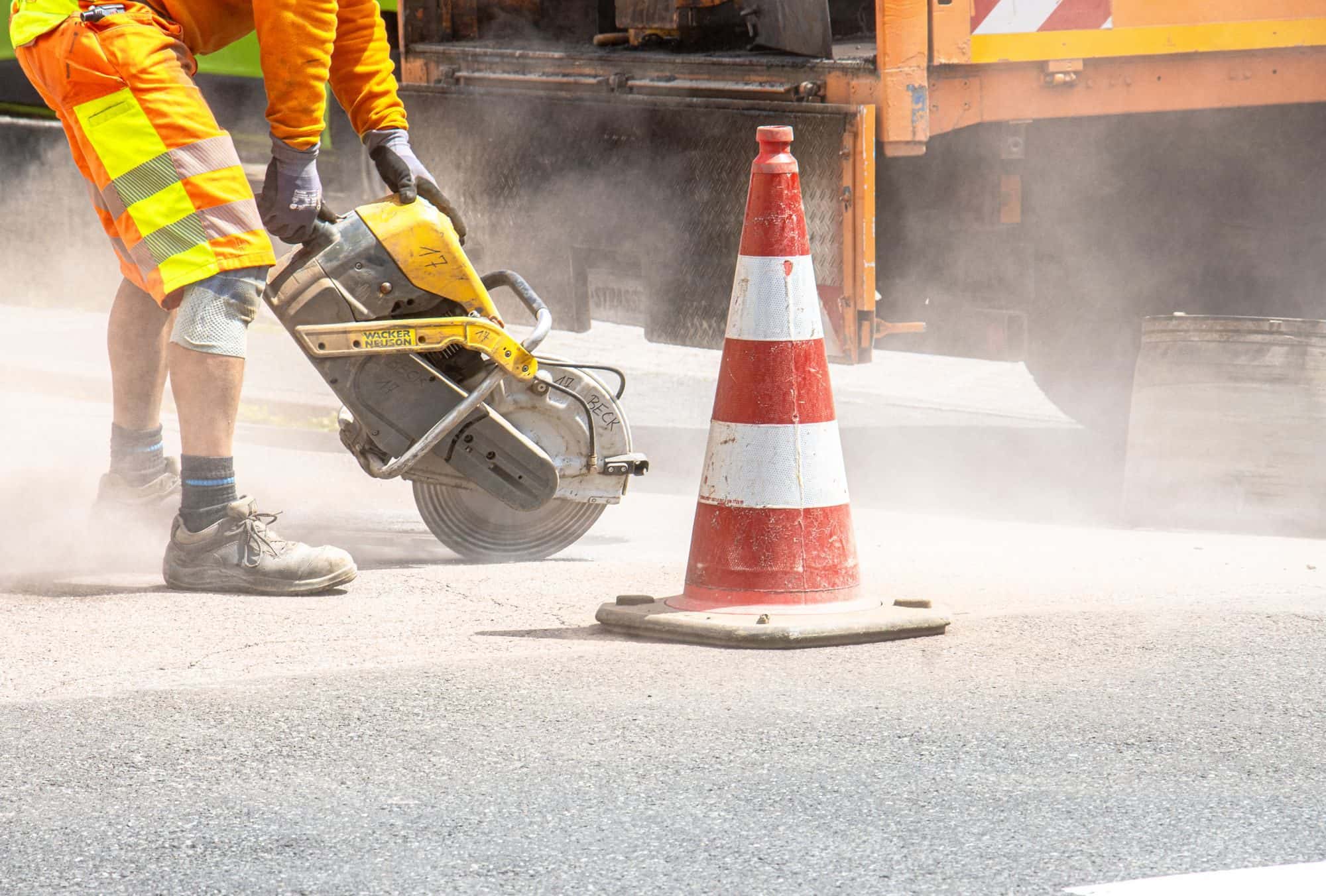
Saw cutting raises dust: eye, hearing and breathing protection and a marked work zone matter here.
Photo: Thomas Fuhrmann / Pexels, Pexels License
Find the applicable federal or state-plan rules.
The task and jurisdiction determine which standards to check. A checklist cannot decide every construction/general-industry question.
Construction/general-industry applicability
Describe what workers actually do and ask the responsible authority or qualified safety adviser which standards apply. Do not select a rule set solely from the company's business name.
State-plan differences
Use OSHA's state-plan directory to locate the responsible program and current local rules. Federal guidance is a starting point when a state plan has its own requirements.
Small-business consultation and current requirements
OSHA links no-cost confidential on-site consultation and small-business guides. Request help for your actual operation and record follow-up actions; a visit or worksheet is not a compliance badge.
Plan controls before selecting PPE.
Personal protective equipment is one part of the plan. Begin by changing or separating hazardous work where possible.
Eliminate/isolate hazards where possible
Consider closing the area, moving delivery timing or changing an unsafe task before relying on clothing alone. Write the selected control, responsible person and check that will show it is in place.
SDS/manual requirements and training
Use the actual documents to identify product/equipment controls and training. Verify everyone understands the assigned task and can raise a missing control before starting.
Respiratory protection when required, not a generic mask prescription
Determine exposure and applicable respiratory-protection requirements with qualified support. Do not treat a dust mask recommendation as a complete respirator program or silica plan.
Hold a site briefing and stop-work plan.
Use the job hazard assessment to hold a short, recorded briefing specific to this site. Resolve an unanswered safety question before assigning the hazardous task.
Responsible person, traffic closure and emergency access
Name the supervisor and who can stop work. Review barriers/routes, customer coordination, emergency access and the process for authorizing a changed closure.
Heat/weather decision and new-worker acclimatization
Plan heat controls, symptom/emergency response and gradual adjustment for workers new to the conditions. Check site conditions and current applicable rules; proposed national heat thresholds are not presented as final rules.
Spill response, first aid and emergency contacts
Record the site address, emergency communication and trained response arrangements. Use the SDS/site plan for spill handling, and keep unauthorized workers out of the response task.
Record training, inspections and incidents.
Keep records that show what was checked and corrected, not just that a form exists.
Equipment/vehicle checks
Use the matching manual and transport requirements to record defects, who checked them and whether the equipment can be released. Remove defective equipment from work pending the required correction.
Employer reporting/recordkeeping rules from official sources
Check current OSHA/state reporting and recordkeeping duties, including urgent reporting even where routine-record exemptions may apply. No deadline is generalized here; retain the official requirement for your situation.
Correct hazards and review near misses
Record what happened, immediate controls, correction owner and closure date. Review why the plan failed and whether the same exposure exists on another job.
Know when specialist planning is needed.
Do not treat a private-lot worksheet as a complete plan for a complex or public-road job.
Public-road traffic control
Use the current FHWA MUTCD, applicable state supplement and road authority requirements. Have qualified people prepare/install the plan required for that road and scope.
Complex sites and hazardous tasks
Escalate unfamiliar equipment, exposures, confined spaces, major traffic interfaces or tasks outside crew competence. Put the qualified reviewer and release condition in the job packet.
Prepare a documented site hazard review and briefing
Describe the work
Record the actual site, crew tasks, products and equipment.
List hazards and affected people
Walk the scope and identify traffic, heat/material, chemical and other task-specific exposures.
Check the applicable sources
Retain matching SDS/manuals and federal or state-plan requirements; seek qualified help for unresolved tasks.
Assign controls and responsibility
Document the control, responsible person, inspection and stop-work condition for each identified hazard.
Brief the crew
Review the site plan, emergencies, weather/heat and change/escalation process, and confirm understanding.
Save corrections and release decisions
Record defects, unresolved questions and follow-up actions before authorizing the work.
Public tools
Use these without an account. Enter your own measurements and quotes. Save records on this device or export a copy for your job folder.
Your working record
Records stay in this browser. Export before switching devices. Do not enter bank details, identification numbers or private customer information.
Download the working documents
Version 1 · As of 2026-10-11. PDF for printing; DOCX and spreadsheets for editing. No email or membership required.
Tools you get as an NPMCA member
Confirmed access and plan limits
Optional member resources. Your plan and the member app determine access. The guide and its public tools work without membership.
Available catalog deals
These live catalog resources include practical tools, help and deals. Check each row's eligible plans and terms in the member app.
- PaveCare Navigator
Compare care price options for your membership and location. Confirm the selected service and final price with the provider. This tool is not insurance.
Plans: PaveCarePlus; NPMCA Business PavePro with PaveCarePlus. Catalog checked as of 2026-10-11.
- Deals, Perks & Savings
Browse member offers in NB Deals. Confirm account access and read the selected offer terms.
Plans: PaveCare; PaveCarePlus; NPMCA Business PavePro with PaveCare; NPMCA Business PavePro with PaveCarePlus. Catalog checked as of 2026-10-11.
- Travel — Member Hotel Rates
Member hotel booking with the current phone access shown in the app. Confirm the complete price and cancellation terms before booking.
Plans: PaveCare; PaveCarePlus; NPMCA Business PavePro with PaveCare; NPMCA Business PavePro with PaveCarePlus. Catalog checked as of 2026-10-11.
- More Travel Deals
Travel booking through the phone access listed in the member app. Check current booking terms.
Plans: PaveCare; PaveCarePlus; NPMCA Business PavePro with PaveCare; NPMCA Business PavePro with PaveCarePlus. Catalog checked as of 2026-10-11.
- LotDesk
Keep lots, quantities and proposals in one place. Open LotDesk from the member app home. An active business plan is required.
Plans: NPMCA Business Membership Only; NPMCA Business PavePro with PaveCare; NPMCA Business PavePro with PaveCarePlus. Catalog checked as of 2026-10-11.
- Business Tax Hotline
Help with business tax questions. This benefit does not process payroll or keep your books.
Plans: NPMCA Business PavePro with PaveCare; NPMCA Business PavePro with PaveCarePlus. Catalog checked as of 2026-10-11.
- Small Business Legal Plan
Business legal help under the plan terms. Confirm whether a particular question is covered and ask about fees before work begins.
Plans: NPMCA Business PavePro with PaveCare; NPMCA Business PavePro with PaveCarePlus. Catalog checked as of 2026-10-11.
- Credit & Collections
Tucker Albin referral help with unpaid business invoices. Active PavePro with PaveCare or PavePro with PaveCarePlus membership is required. Check provider terms; recovery is not guaranteed.
Plans: NPMCA Business PavePro with PaveCare; NPMCA Business PavePro with PaveCarePlus. Catalog checked as of 2026-10-11.
PaveCare health benefits are not insurance. Household access is an optional paid add-on. Compare membership plans.
New company offer
Details being finalized
Frequently asked questions
Which OSHA rules apply to a small pavement crew?
Check the actual tasks and jurisdiction with OSHA or the state plan. Company size or a downloaded checklist does not settle every duty.
How do I find my state's OSHA plan?
Use the linked OSHA state-plan directory and the program's current official guidance for the scope.
What should a job hazard assessment cover?
List tasks, people exposed, hazards, selected controls, responsible people, training, emergency arrangements and stop-work/change conditions.
Do I need an SDS for every product?
Maintain the current safety data sheets required for hazardous chemicals used at work and connect them to labels and training. Ask the supplier about missing or changed documents.
When do cutting or grinding create silica obligations?
When the actual task and exposure fall under applicable rules. Check OSHA's construction silica resources and qualified task planning rather than assuming all maintenance work is alike.
How should I plan for hot materials and traffic?
Use the exact product/machine instructions and a site-specific separation/traffic plan with trained workers. This page supplies a planning record, not burner or road-control operating instructions.
What changes for public-road work?
The road authority, current MUTCD and state supplement may require a specific traffic-control plan and qualifications beyond a private-lot closure.
Does completing this checklist certify compliance?
No. It records preparation and unresolved actions. Compliance depends on the applicable requirements and how the work is actually performed.
Related guides
Sources and corrections
- OSHA: Small business resources · As of 2026-10-11
- OSHA: State plans · As of 2026-10-11
- OSHA: Hazard communication · As of 2026-10-11
- OSHA: Crystalline silica in construction · As of 2026-10-11
- OSHA: Heat exposure · As of 2026-10-11
- OSHA: Recordkeeping and reporting · As of 2026-10-11
- FHWA: Manual on Uniform Traffic Control Devices · As of 2026-10-11 · Use the current edition and applicable state supplement for the actual public-road scope.
Found an error or an outdated source? Send NPMCA a correction with the page and source.
Return to the Start a Business guide →