
Lesson P201.6 · Personal Finance 201: Build Wealth
Taxes, level two: credits, refunds and free filing
5-minute read · Figures for tax year 2026
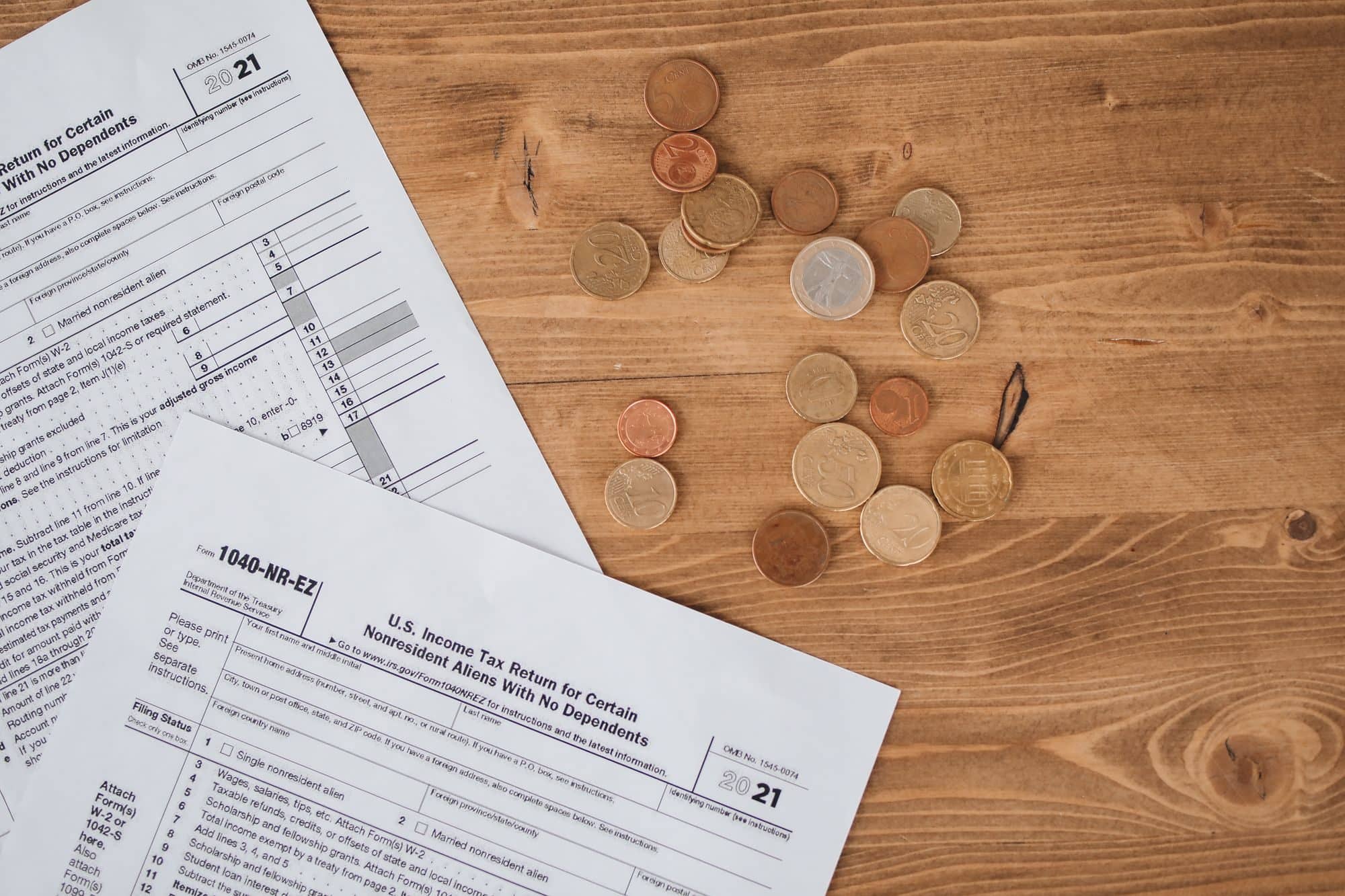
Photo: Polina Tankilevitch / Pexels, Pexels License
The short answer
Check four things every year: the Earned Income Tax Credit, the Child Tax Credit, the Saver's Credit and the overtime deduction. A credit cuts your tax dollar for dollar; a deduction only cuts the income you're taxed on. File free through IRS Free File or a VITA site if your income fits. If you pay a preparer, the law requires them to sign your return.
Credits beat deductions
A deduction lowers the income you're taxed on. A credit comes off the tax itself. In the 12% bracket, a $1,000 deduction saves $120, and a $1,000 credit saves $1,000. Some credits can add to your refund even when you owe little or nothing.
| What to check for 2026 | What it's worth |
|---|---|
| Child Tax Credit | $2,200 per child; up to $1,700 of it can come back as a refund |
| Earned Income Tax Credit | Up to $664 with no children, up to $8,231 with three or more |
| Saver's Credit | 50%, 20% or 10% of up to $2,000 you save for retirement ($4,000 joint), with income limits |
| Overtime deduction | Up to $12,500 ($25,000 joint) of the overtime premium: the extra half in time and a half |
| Car-loan interest deduction | Up to $10,000 of interest on a loan taken after 2024 for a new, U.S.-assembled personal vehicle |
Your overtime amount shows on your 2026 W-2 in box 12, code TT. The deduction lowers federal income tax only. Social Security and Medicare still come out of overtime, and each state decides its own treatment.
A tax deduction never makes a car loan a good idea
The car-loan interest deduction doesn't change the math on a car loan. Example (made-up numbers): pay $2,500 of car-loan interest in a year, and in the 12% bracket the deduction saves $300. You're still out $2,200. Leases and used vehicles don't qualify, and the deduction phases out above $100,000 of modified adjusted gross income ($200,000 joint). Lesson P201.7 covers buying your next vehicle with cash.
Plan the refund before it lands
Decide where a refund goes before it arrives. Without a plan, it tends to disappear into everyday spending.
Example (made-up numbers): Lena's household expects a $3,200 refund. They're finishing their emergency fund, so they split it: $2,000 to the emergency fund, $600 to the Winter Fund, $300 to giving and $300 for a family day out.
If a big refund comes from extra withholding rather than credits like the Earned Income Tax Credit, too much is coming out of your checks. That's your own money coming back late. The IRS Tax Withholding Estimator shows how to adjust your W-4 so more comes home each payday.
File free, and choose a preparer with care
- IRS Free File offered free guided software in the 2026 filing season for adjusted gross income of $89,000 or less.
- VITA sites offer free preparation by trained volunteers. The IRS lists about $70,244 or less as a general guide, and each site sets its own limits. Find one at 800-906-9887.
- IRS Direct File was not offered in the 2026 season.
A paid preparer is required by law to sign your return and include a preparer tax identification number (PTIN). Never sign a blank return, skip anyone whose fee is a percentage of your refund, and don't let a preparer deposit your refund into their own account. Keep your tax records at least 3 years after you file; the IRS lists cases that need longer.
Your Move
Do this week
- Check last year's income against the Free File and VITA limits. Find your nearest VITA site (800-906-9887) and ask when it starts booking, or bookmark Free File for the season.
- List the credits that might fit you: kids, work income, retirement savings, overtime.
- Write your refund split now, in dollars, before the refund shows up.
- If last year's refund or tax bill was big, run the Withholding Estimator.
Log it: Refund split written.
Common questions
What's the difference between a tax credit and a deduction?
A deduction lowers the income you're taxed on; a credit lowers the tax itself. In the 12% bracket, a $1,000 deduction saves $120, and a $1,000 credit saves $1,000.
Who can file taxes for free?
IRS Free File covered adjusted gross income of $89,000 or less in the 2026 filing season. VITA generally serves people making about $70,244 or less, and each site sets its own limits.
My preparer won't sign my return. Is that a problem?
Yes. The law requires paid preparers to sign and include their PTIN. The IRS calls preparers who won't "ghost preparers" and lists them in its 2026 Dirty Dozen, and you're legally responsible for what's filed.
Watch out for
From the IRS's 2026 Dirty Dozen list of scams:
- Ghost preparers who won't sign your return or give a PTIN.
- Bogus promotions of a "Self-Employment Tax Credit" that many people don't qualify for.
- Schemes that inflate withholding on W-2s or 1099s to puff up a refund.
- "Offer in compromise mills" that overpromise on settling tax debt.
- Fake charities that pop up after tragedies.
Free help
- IRS: Free File
- IRS: Free tax return preparation (VITA), 800-906-9887
- IRS: Tax Withholding Estimator
- IRS: Topic 254, how to choose a tax return preparer
Free practice
Lesson check
5 questions on this lesson, one at a time, with the answer and the reason after each. Pass with 4 right, including every must-know question.
This is general education, not tax, legal, investment or insurance advice. Rules change and every situation is different. Check the sources below, and talk to a qualified professional before you act on it.
Sources
- IRS: Rev. Proc. 2025-32, 2026 tax figures
- IRS: FS-2026-13, overtime deduction
- IRS: Working Families Tax Cuts: individuals and workers
- IRS: Retirement savings contributions credit (Saver's Credit)
- IRS: Earned Income Tax Credit
- IRS: IR-2026-05, use IRS Free File
- IRS: Free tax return preparation for qualifying taxpayers
- IRS: Tax Withholding Estimator
- IRS: Topic 254, how to choose a tax return preparer
- IRS: IR-2026-30, Dirty Dozen tax scams for 2026
- IRS: How long should I keep records?