
Lesson B101.6 · Business Finance 101: Run It Clean
Owner taxes: quarterly payments and the tax account
5-minute read · Figures for tax year 2026
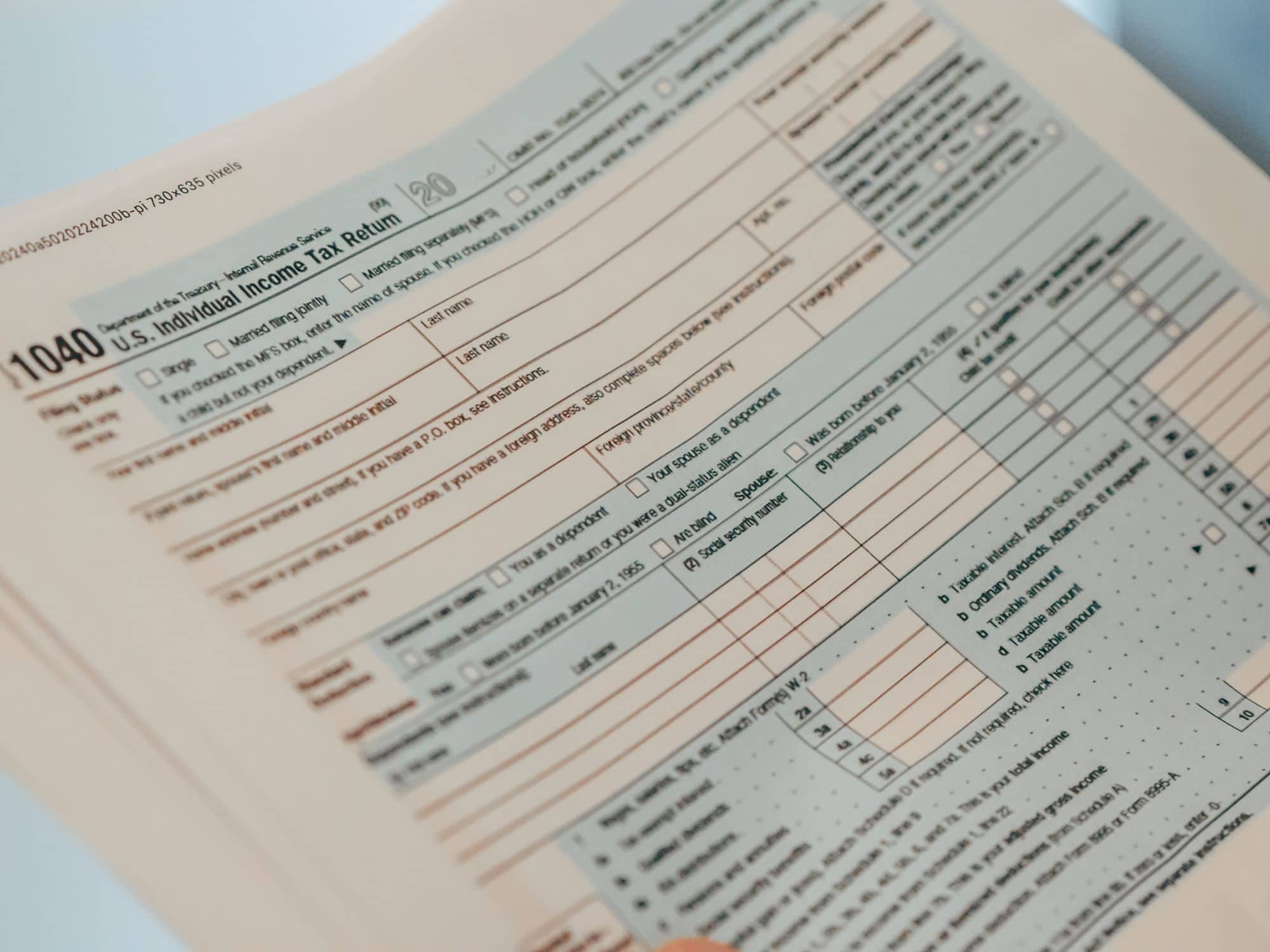
Photo: Kindel Media / Pexels, Pexels License
The short answer
Owners pay their own income tax and self-employment tax during the year, in four estimated payments. Feed a separate tax account from every deposit, at a percentage your tax pro sets, and pay from it on the four dates. Deductions are worth taking, but a deduction saves only part of what you spend, never all of it.
What an owner owes
- Self-employment tax. This is Social Security and Medicare for the self-employed: 15.3% (12.4% Social Security plus 2.9% Medicare) on 92.35% of your net earnings, once net earnings reach $400. You pay both halves, and you deduct half of it.
- Income tax on your profit, federal and state if your state has one.
- The qualified business income deduction. Many owners can deduct up to 20% of their qualified business income. The 2025 law made it permanent, and from 2026 there's a $400 minimum deduction for people with at least $1,000 of qualified business income from a business they actively run.
If your company is an S corporation, tax comes out of your wages through payroll (B101.2), and you may still owe estimates on the rest.
Pay four times a year, from the tax account
For 2026 income, estimated payments are due April 15, June 15 and September 15, 2026, and January 15, 2027. You generally must pay if you expect to owe $1,000 or more after withholding and credits. You avoid an underpayment penalty by paying at least the smaller of 90% of this year's tax or 100% of last year's (110% if last year's adjusted gross income was over $150,000).
If most of your income comes in summer, ask your tax pro about the annualized income installment method. The IRS lets people whose income comes in unevenly lower or eliminate some payments that way, using Form 2210, Schedule AI.
To set the tax account percentage, your tax pro estimates the year's tax and divides it by expected deposits. Example (made-up numbers): Ray's tax pro expects about $34,000 of federal and state tax on about $340,000 of deposits. That's 10%, so every $8,000 check sends $800 to the tax account the day it lands. Pay from your bank account through your IRS Online Account, IRS Direct Pay or EFTPS, at no fee, and keep the confirmations.
A deduction saves only part of the cost
Materials, wages, insurance, fuel and the business share of your phone are all deductible. So are vehicle costs: actual costs, or business miles at the IRS rate (72.5 cents a mile January to June 2026, 76 cents July to December). Equipment can often be deducted in full the year you buy it, through Section 179 or bonus depreciation, which is a permanent 100% for property acquired after January 19, 2025. Your tax pro decides how much to take and when.
Example (made-up numbers). Nate is single, has no other income, nets $100,000 in 2026, and deducts a $10,000 machine in full. His federal income tax drops by about $1,600 and his self-employment tax by about $1,400. That's about $3,000 back on $10,000 spent, before state tax. He's still out about $7,000. (Why not $2,200 at his 22% rate? Lower profit also shrinks his qualified business income deduction and the deductible half of his self-employment tax.)
If he needed the machine, the timing helps. If he bought it in December only to cut the tax bill, he's $7,000 poorer. A loan doesn't change the math: the deduction comes this year, and the payments run for years.
Paying subs: W-9s and 1099-NECs
Get a Form W-9 from every subcontractor before the first payment. Spring, when a sub starts, is the easy time; January, when you're chasing addresses, is not. If one won't give you a correct taxpayer ID number, you must withhold 24% (backup withholding). For 2026 payments, file a Form 1099-NEC for anyone you paid $2,000 or more (the line was $600 through 2025). Send it to them and file it with the IRS by February 1, 2027. Whether someone should be a contractor at all is B101.7.
Your Move
Do this week
- Open a savings account for the business named "Taxes," if you don't have one.
- Ask your tax pro for this year's estimated tax and turn it into a percentage of deposits.
- Set up the transfer: that percentage of every deposit, the day it lands.
- Put the four payment dates on your calendar, with a reminder two weeks before each.
Log it: Tax account set, dates on the calendar.
Common questions
Can't I just pay it all in April?
If you expect to owe $1,000 or more after withholding and credits, waiting can bring an underpayment penalty. Paying the safe harbor amount on time avoids it.
My income comes in summer. Do I still pay in April?
Maybe less than you think. The annualized method can lower early payments for seasonal income. Your tax pro figures it.
Should I buy equipment at year-end to save tax?
Only if you need the equipment. In the example, the $10,000 machine saved about $3,000 of tax and cost $10,000.
Watch out for
- A "Self-Employment Tax Credit" pitch. It's on the IRS's 2026 Dirty Dozen list of tax scams, along with inflated withholding claims on W-2s and 1099s.
- A preparer who won't sign your return. The IRS calls them ghost preparers.
- Companies that promise to settle your tax debt for less. The IRS warns about these offer-in-compromise mills.
- Borrowing from the tax account to get through a slow week.
Free help
- IRS: Form 1040-ES, estimated tax
- IRS: Topic 554, self-employment tax
- IRS: Qualified business income deduction
- America's SBDC: Find your SBDC for free business consulting
Members: tools for this Move (after sign-in)
For National Pavement Maintenance Contractors Association (NPMCA) members:
- Tax hotline in the Finance Center: /member-resources/tax-hotline
NPMCA may be paid by partners listed here. The lesson above is the same either way.
Free practice
Lesson check
5 questions on this lesson, one at a time, with the answer and the reason after each. Pass with 4 right, including every must-know question.
This is general education, not tax, legal, investment or insurance advice. Rules change and every situation is different. Check the sources below, and talk to a qualified professional before you act on it.
Sources
- IRS: Topic 554, self-employment tax
- IRS: 2026 Form 1040-ES, estimated tax for individuals
- IRS: Qualified business income deduction
- IRS: Revenue Procedure 2025-32, 2026 inflation adjustments
- IRS: Notice 2026-11, bonus depreciation
- IRS: Standard mileage rates
- IRS: Instructions for Forms 1099-MISC and 1099-NEC
- IRS: Backup withholding
- IRS: Dirty Dozen tax scams for 2026
- America's SBDC: Find your SBDC