
Lesson B101.9 · Business Finance 101: Run It Clean
Get paid: deposits, terms, invoices and lien notices
5-minute read · Figures checked October 2026
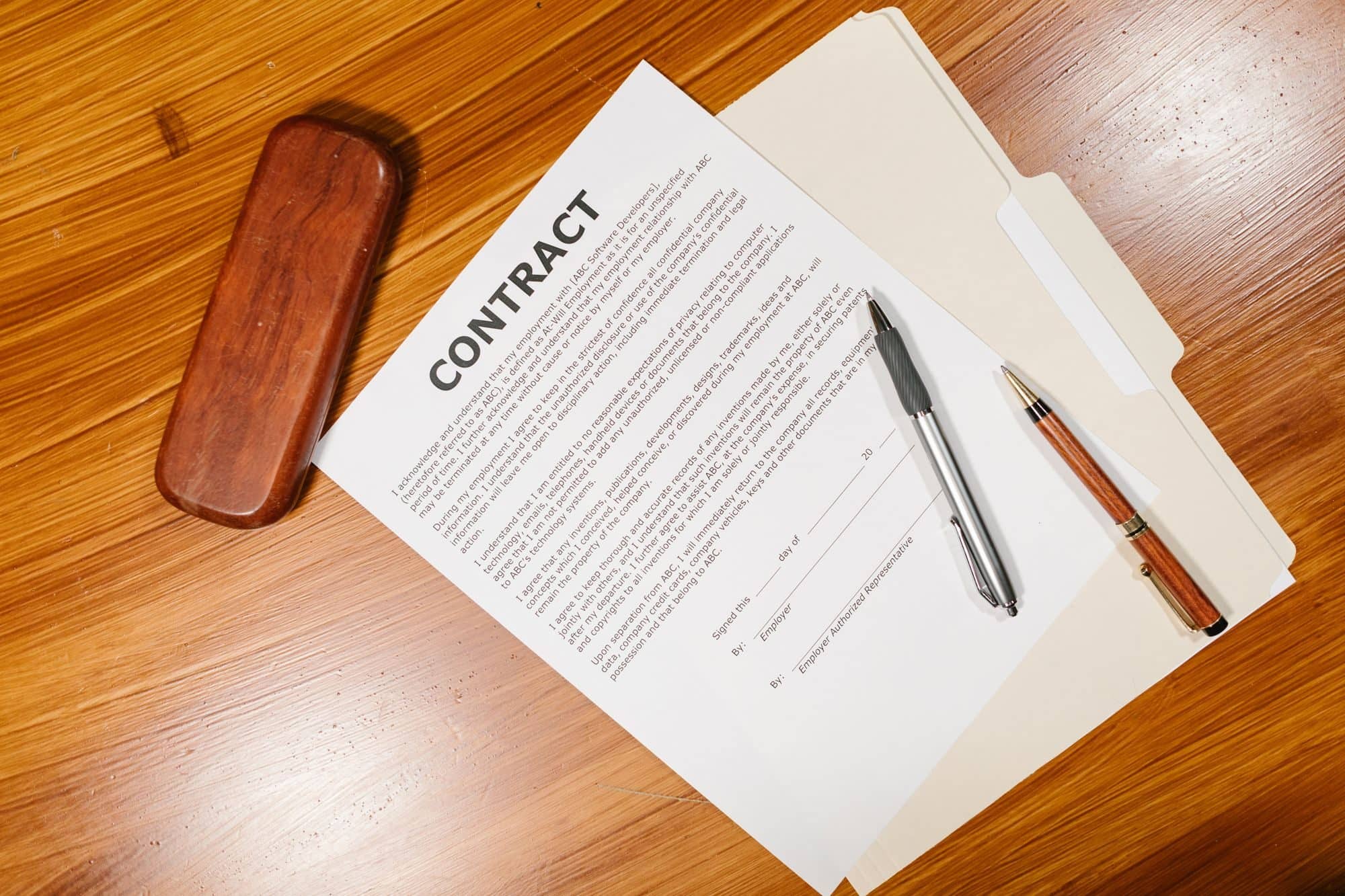
Photo: RDNE Stock project / Pexels, Pexels License
The short answer
Put the terms in writing before the work starts: scope, price, deposit, when payment is due and how. Invoice the day the job is done. Learn your state's lien rules and send any required notice on time, because a missed notice can cost you the right to file a lien at all.
Put the terms in writing first
Every job gets a written estimate or contract that covers:
- Scope: what's included and what isn't, such as cleaning, crack filling, the number of coats and the striping layout, with honest quantities.
- Price and deposit. Deposit rules vary by state, and some limit what you can collect up front on home jobs.
- When payment is due and how: check, card or bank transfer.
- Change orders: extra work gets a written price, signed before you do it.
- Weather: how a rained-out day gets rescheduled.
- Any lien notice your state requires.
Sales made at a customer's home. Under the Federal Trade Commission's Cooling-Off Rule, a sale of $25 or more made at the buyer's home ($130 or more at the buyer's workplace or a temporary spot like a home show) can be canceled until midnight of the third business day after the sale. You must tell the buyer about that right when you make the sale, and give them a dated copy of the contract and two copies of a cancellation form. If they cancel, you have 10 business days to refund. The rule covers sales mainly for personal, family or household use, so commercial work falls outside it. Many states add rules of their own. Schedule the work after the three days pass.
Invoice the day you finish
Send the invoice before the crew leaves the lot, or that evening, with photos of the finished work. A late invoice means a late payment.
Commercial customers, such as property managers, HOAs, churches and businesses, often need vendor setup before the first job: a W-9, a certificate of insurance, and sometimes an additional insured endorsement. Many pay on terms like net 30. Ask about their terms before you bid, and put a due date on every invoice.
Card fees come off the top. Example (made-up rate): at a 3% fee, a $6,000 job paid by card costs you $180. If you want customers to pay card fees, follow your state's rules and your card processor's rules, or build the cost into your overhead. When a customer doesn't pay, Business Finance 102: Bank-Ready covers collections.
Lien rights: on time or not at all
A mechanic's lien gives an unpaid contractor or supplier a claim against the property. States set strict notice and filing deadlines, and missing one can end the right. Two neighboring states show how much the rules differ:
- Missouri: a contractor who contracts directly with the owner must give a written Notice to Owner, in 10-point bold type, before receiving any payment. It goes out at contract signing, when materials arrive, when work starts, or with the first invoice. Without it, the contractor generally has no lien.
- Kansas: on an owner-occupied home for two families or fewer, subcontractors and suppliers with claims over $250 can claim a lien only if the owner got the statutory warning first. They must file the lien statement within 3 months of their last work, and residential property gets no extension.
Example (made-up dates). A sub's last day on an owner-occupied Kansas home is May 12. The lien statement must be filed by August 12.
Your Move
Do this week
- Write your standard payment terms: deposit, when the balance is due, how customers can pay, and what happens when a payment is late.
- Look up your state's lien notice rules with your attorney or your state's statutes, and add any required notice to your contract or first invoice.
- If you sell jobs at customers' homes, add the 3-day cancellation notice and forms.
- Have an attorney review the terms once, then use them on every job.
Log it: Payment terms adopted.
Common questions
How big a deposit can I ask for?
It depends on your state, and some states limit deposits on home jobs. Ask your attorney or your state attorney general's consumer office.
Do I need a lien notice for a homeowner's driveway?
In some states, yes, and before you take any payment. Missouri requires one from a contractor working directly for the owner. Check your state's rules.
Can I charge a fee for card payments?
That depends on your state's rules and your card processor's. You can also build card costs into your overhead.
Watch out for
- Starting a home job before the 3-day cancellation window closes.
- Looking up your lien deadline only after a customer is late.
- Extra work agreed to on the lot with no written change order.
- Invoices with no due date.
Free help
- FTC: The Cooling-Off Rule
- Missouri Revisor of Statutes: Section 429.012, Notice to Owner
- Kansas statutes: K.S.A. 60-1103 and K.S.A. 60-1103a
- America's SBDC: Find your SBDC for free business consulting
Members: tools for this Move (after sign-in)
For National Pavement Maintenance Contractors Association (NPMCA) members:
- Merchant processing in the Finance Center: /member-resources/merchant-processing
- Legal services in the Finance Center: /member-resources/legal-services
NPMCA may be paid by partners listed here. The lesson above is the same either way.
Free practice
Lesson check
5 questions on this lesson, one at a time, with the answer and the reason after each. Pass with 4 right, including every must-know question.
This is general education, not tax, legal, investment or insurance advice. Rules change and every situation is different. Check the sources below, and talk to a qualified professional before you act on it.
Sources
- FTC: Buyer's remorse: the FTC's Cooling-Off Rule may help
- Missouri Revisor of Statutes: Section 429.012
- Kansas Revisor of Statutes: K.S.A. 60-1103
- Kansas Legislature: K.S.A. 60-1103a
- America's SBDC: Find your SBDC